Drug charges in Brazil
Drug trafficking, drug possession and related offenses under Brazilian Law 11.343/2006 — the most common charge against foreign nationals detained in Brazilian airports, ports and border areas.
For over 15 years, representing foreign nationals and their families in Brazilian criminal proceedings — from drug charges and pretrial detention to extradition and white-collar defense. Available 24/7 for urgent matters.
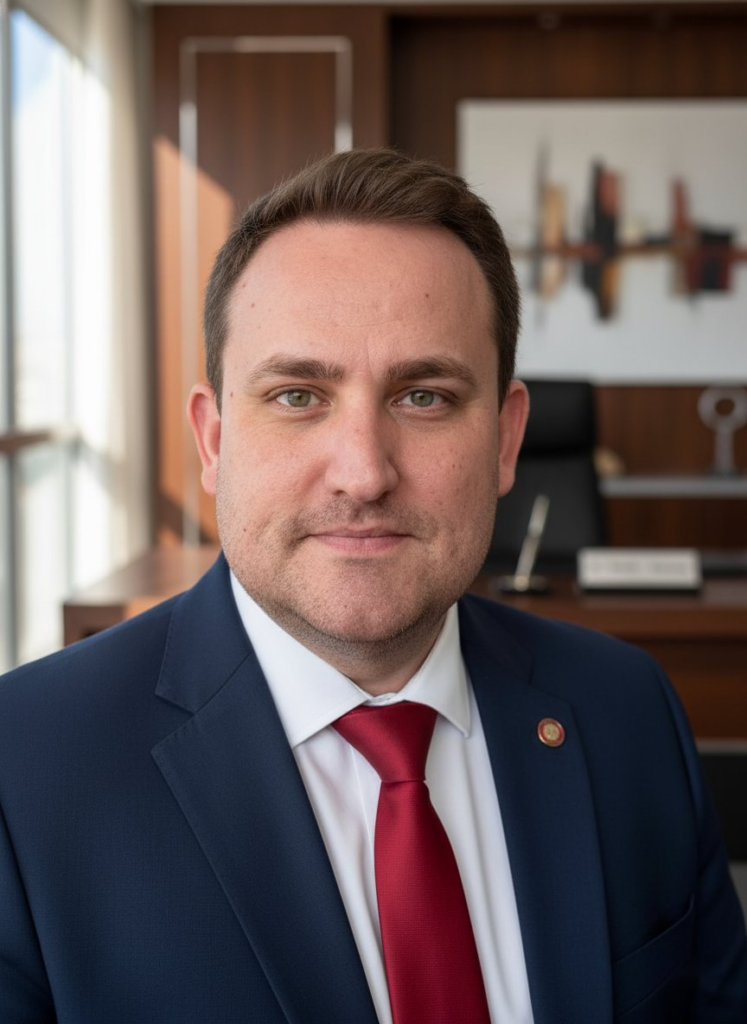
A criminal investigation or arrest in Brazil is, for a foreign family, one of the most stressful experiences imaginable — a foreign language, an unfamiliar legal system, and a clock ticking from thousands of miles away. Our role is to become your direct, English-speaking line of action on the ground in Brazil.
Drug trafficking, drug possession and related offenses under Brazilian Law 11.343/2006 — the most common charge against foreign nationals detained in Brazilian airports, ports and border areas.
Immediate representation at the custody hearing (audiência de custódia) and petitions for provisional liberty (liberdade provisória) when a family member has just been arrested.
Defense in extradition proceedings before the Brazilian Supreme Court (STF) in Brasília, under bilateral treaties — including cases involving U.S., European and Latin American jurisdictions.
Defense in investigations and prosecutions involving fraud, tax offenses, money laundering, corruption and market-manipulation charges — including parallel proceedings in Brazil and abroad.
Emergency petitions before state courts, the Superior Court of Justice (STJ) and the Supreme Court (STF) to challenge unlawful detention, abuse of authority or procedural violations.
Every criminal matter is unique. Send us the details — we will review your case confidentially and respond within hours. Request confidential consultation →
Brazil's criminal procedure is very different from what you see on American television. There are no Miranda warnings at the scene of arrest. There is no grand jury — charges are filed directly by the prosecutor (Ministério Público). And trial by jury exists only for intentional crimes against life (homicide, incitement to suicide, infanticide and abortion-related offenses); every other crime — including drug trafficking, fraud and theft — is decided by a single judge. Here is what every foreign family needs to know in the first 24 hours.
Brazilian criminal law is codified in the Penal Code (Código Penal) and the Code of Criminal Procedure (Código de Processo Penal). Judges apply written statutes; judicial precedent plays a secondary role.
Anyone arrested must be presented to a judge within 24 hours at an audiência de custódia. The judge decides between release, provisional liberty or pretrial detention. This is the single most important moment of the case.
A police inquiry (inquérito policial), presided over by a police chief (delegado de polícia), followed by the criminal action (ação penal), filed by the prosecution (Ministério Público) and judged by an independent court. In Brazil, the judiciary, the prosecution and the police are three separate institutions. Full adversarial rights — counsel, cross-examination and evidence — apply in the court phase.
Only intentional crimes against life (homicide, attempted homicide, infanticide and abortion-related offenses) go to a seven-member jury. Drug trafficking, fraud, theft and all other crimes are decided by a single judge.
Contact a Brazilian criminal defense attorney admitted to the Brazilian Bar (OAB). A U.S. or foreign attorney cannot appear in a Brazilian criminal court. Do not wait for consular assistance alone — consulates can provide lists of attorneys, but cannot represent a detainee or appear at hearings.
This is the question we receive most often from American families. The honest answer is: not in the way the United States does. But Brazilian law recognizes powerful cooperation and non-prosecution mechanisms that can dramatically reduce — or eliminate — a sentence. Knowing which tool applies to your case is where strategy begins.
The closest Brazilian counterpart to a U.S. federal cooperator agreement (§5K1.1 / Rule 35 substantial-assistance deal). The defendant provides information that leads to identifying co-conspirators, recovering assets or preventing further crimes. In exchange, the agreement may offer:
The closest counterpart to a U.S. deferred prosecution agreement (DPA) or pretrial diversion. For non-violent offenses with a minimum sentence under four years, the defendant may accept certain conditions and, once completed, avoid a criminal conviction entirely. Typical conditions include:
In some cases, a cooperation or non-prosecution agreement is transformative. In others, a strong defense on the merits — suppression of illegal evidence, habeas corpus, or challenging pretrial detention — is the better path. This decision requires experienced Brazilian criminal counsel who knows the prosecutors, the courts and the realistic outcomes in your jurisdiction.
From the first hour after arrest to appeals before the highest Brazilian courts, every matter is handled directly by a Brazilian attorney admitted to practice nationwide — with clear, English-language reporting to the family at every stage.
Defense in drug-related prosecutions under Brazilian Law 11.343/2006, including international trafficking, airport and port arrests, and cases qualifying for reduced sentencing under Article 33, §4.
Immediate representation at the audiência de custódia, petitions for provisional liberty (liberdade provisória) and motions to replace pretrial detention with alternative measures.
Habeas corpus petitions before state courts, the Superior Court of Justice (STJ) and the Supreme Court (STF), and emergency motions in cases of unlawful detention or abuse of authority.
Representation in active and passive extradition proceedings before the Brazilian Supreme Court (STF), including defense strategies based on double criminality, statute of limitations and human rights.
Defense in fraud, tax offenses, money laundering, corruption and market-related prosecutions, often involving parallel proceedings in Brazil, the United States and Europe.
Negotiation of colaboração premiada (cooperation agreements) under Law 12.850/2013 and Non-Prosecution Agreements (ANPP) under Article 28-A of the Code of Criminal Procedure.
If a family member has just been arrested or is facing investigation in Brazil, time is the single most important resource. Submit the details of the case and receive a confidential preliminary review from an English-speaking Brazilian criminal defense attorney.
We represent foreign individuals, families and companies facing criminal proceedings in Brazil — with technical excellence, absolute discretion and genuinely personalized attention. Every case is handled directly by the principal attorney, not delegated to associates or call centers.
"When someone you love is arrested abroad, you do not need a translator. You need a Brazilian criminal lawyer who can explain the system in your language, act on the ground today, and tell you the truth about what to expect."
Over 15 years dedicated to criminal defense, with active practice before state courts, federal courts and the Brazilian superior courts (STJ and STF) in Brasília — including criminal matters of international repercussion.
No intermediaries, no call centers, no junior associates handling your communication. You speak directly with the attorney representing your case.
Procedural documents are filed in Portuguese, as Brazilian law requires. Every relevant development is then reported to you and your family in clear, straightforward English.
Brazilian courts operate on a fully digital litigation system. We represent clients in São Paulo, Rio de Janeiro, Brasília and every other Brazilian jurisdiction, from our office in the capital.
Criminal emergencies do not wait for business hours. For arrests and custody hearings, we respond the same day — across time zones.
Brazilian courts operate on a fully digital litigation system. All procedures — from hiring to signing documents and paying fees — are conducted electronically, with full legal validity under Brazilian law.
Submit the form below. We review the matter and schedule a confidential video consultation at a convenient time across time zones.
Retainer agreement and power of attorney are signed electronically with full legal validity under Brazilian law. International payment is supported.
Filings, hearings and communications with Brazilian courts are handled digitally — in any Brazilian state, from our office in Brasília.
You receive clear status reports in English, with direct access to your attorney. No call centers, no intermediaries.
Brazilian criminal procedure raises many doubts for foreign families. Below are the questions we receive most often from American, European and Latin American clients.
The first 24 hours are critical. Under Brazilian law, anyone arrested must be presented to a judge within 24 hours at a custody hearing (audiência de custódia), where the court decides between release, provisional liberty or pretrial detention. Retain a Brazilian criminal defense attorney admitted to the Brazilian Bar (OAB) immediately. Only attorneys admitted in Brazil can appear before Brazilian courts — a U.S. or foreign attorney cannot substitute for local counsel in a Brazilian criminal proceeding.
Yes. The entire engagement — initial consultation, retainer agreement, power of attorney and international payment — can be handled remotely, with full legal validity in Brazil. Brazilian law recognizes electronic signatures and digital documents. All communication with the international client and family is conducted in English.
Not in the same form. Brazil does not allow a defendant to simply plead guilty in exchange for a reduced sentence for most crimes. However, Brazilian law recognizes colaboração premiada (rewarded cooperation), closely analogous to a U.S. federal cooperator agreement under §5K1.1 of the Sentencing Guidelines. Under Law 12.850/2013, a defendant who cooperates effectively may obtain a sentence reduction of up to two-thirds, a change of sentencing regime, or, in exceptional cases, judicial pardon (perdão judicial). For lower-level, non-violent offenses, Brazil also offers the Non-Prosecution Agreement (ANPP), similar to a U.S. deferred prosecution agreement.
Brazil does not use a monetary bail system like the United States. There is no bail bondsman industry. Instead, after the custody hearing (audiência de custódia), the judge decides between three possibilities: unconditional release, provisional liberty (liberdade provisória) — which may include conditions and, in some cases, a fiança (a small monetary guarantee) — or pretrial detention (prisão preventiva). The decision is based on legal criteria defined in the Brazilian Code of Criminal Procedure, not on posting a private bond.
Pretrial detention (prisão preventiva) in Brazil can last months or, in complex cases, over a year. Brazilian law requires courts to review the necessity of pretrial detention every 90 days, but extensions are common, particularly in drug trafficking and organized crime cases. Effective legal representation — including habeas corpus petitions and motions for substitution by alternative measures — is often the key to securing release before trial.
Drug trafficking in Brazil is governed by Law 11.343/2006. The base penalty ranges from 5 to 15 years of imprisonment, plus fines. Foreign nationals arrested for drug trafficking are typically detained pretrial and face additional consequences, including expulsion from Brazil after serving the sentence. However, defendants without prior convictions and without ties to criminal organizations may qualify for a reduced sentence of one-sixth to two-thirds under Article 33, §4. Strategic defense can significantly affect the outcome.
Yes. Brazil and the United States have a bilateral extradition treaty. Extradition requests are reviewed by the Brazilian Supreme Court (STF), which evaluates compliance with Brazilian law, double criminality, statute of limitations and human rights standards. Brazil does not extradite its own nationals. Extradition defense is a specialized practice requiring experienced counsel before the STF in Brasília.
Only for intentional crimes against life — homicide, attempted homicide, infanticide and abortion-related offenses — which are tried by a seven-member jury (Tribunal do Júri). Every other criminal case, including drug trafficking, fraud, theft and white-collar matters, is decided by a single judge. There are no Miranda warnings read at arrest, though the rights to remain silent and to counsel are guaranteed by the Brazilian Constitution.
Yes. A Brazilian attorney admitted to the OAB may practice before any court in the country. Combined with Brazil's fully digital judiciary, this means we represent clients in criminal proceedings throughout the national territory — including São Paulo, Rio de Janeiro, Brasília, Belo Horizonte, Curitiba, Porto Alegre, Salvador, Recife, Fortaleza, Manaus and any other Brazilian jurisdiction — directly from our headquarters in Brasília, seat of the Superior Court of Justice (STJ) and the Supreme Court (STF).
All client communication, legal opinions and case reports are delivered in English. Procedural documents before Brazilian courts are drafted in Portuguese, as required by Brazilian procedural law, and summarized for the international client and family in clear English.
Fees are discussed after an initial confidential consultation, once the nature and complexity of the matter are understood. We work with fixed fees, monthly retainers, hourly fees or hybrid arrangements, always formalized in a written retainer agreement before any work begins. As a boutique practice focused on high-complexity matters, our engagement model is selective and premium.
Send the details of the case and receive a confidential preliminary review from an English-speaking Brazilian criminal defense attorney.
Brasília · DF · Brazil
All information is treated under strict attorney–client confidentiality.
Your information will be handled with strict confidentiality and used exclusively to respond to your matter.